“It’s only a few quid.” Meet the yearly version.
The first price is small. How often you pay it does the interesting bit.
SIDEQUEST · 3 MIN READ · 19 NOVEMBER 2026 · AI-assisted editorial work
THE QUICK TAKE
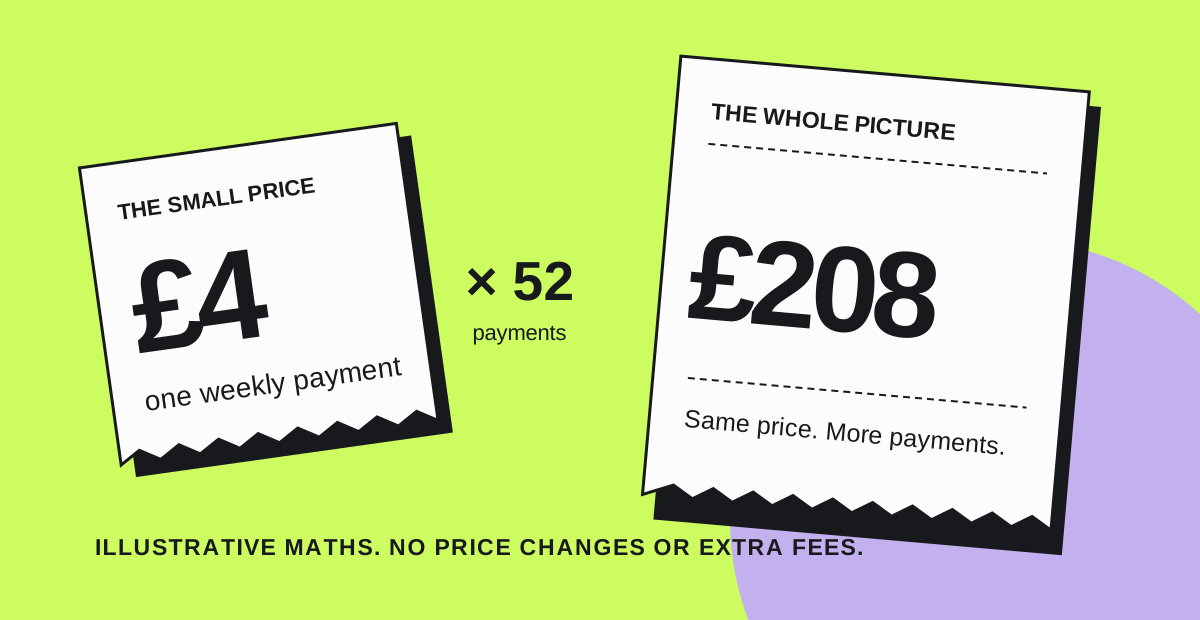
A £4 weekly payment adds up to £208 over 52 payments. The price and the payment frequency both matter. A bigger total helps you decide whether something is worth it to you.
£4 once is £4. £4 turning up every week has brought friends.
There is nothing automatically wrong with a small regular purchase. You might use it, enjoy it and happily choose it. Understanding the total makes that a decision rather than a surprise.
“Per month” is doing some work.
Read the whole price. Monthly, every four weeks and weekly describe different payment patterns. Compare them over the same period, using the actual number of payments.
Here is an invented £5 charge counted three ways. These are maths examples, not prices for real products.
Try the bigger number.
Move the slider to a made-up weekly amount. The calculator multiplies it by 52. It does not ask for your real spending or send the number to us.
Same weekly amount × 52. No price changes, interest or extra fees. The calculator does not save your choice.
Useful does not mean “cancel everything”.
Your calculator has no opinion about your music, games or snacks. It just adds things up. You supply the judgement: do I use this, do I enjoy it, and does it fit the money available?
A price is only one part of that decision. Check what is included, when a trial ends, the next renewal date and how cancellation works. A low first price does not explain the entire deal.
Give future-you a clear note.
For something you are considering, privately note the price, payment frequency and renewal date. Compare the total with the money you have available and the other things you need it for. A trusted adult can help with purchases or terms you are unsure about.
No guilt required. A small payment can be good value. It just deserves to introduce you to all its future appearances.
YOUR MOVE
Read the amount and the frequency together. Then ask whether the whole deal is worth it to you.
SHOW THE RECEIPTS
The guidance behind this.
MoneyHelper: beginner's guide to managing money explains understanding money coming in and going out, recording spending and comparing totals. The calculations, graphics and fictional prices here are Sidequest examples.
Source checked 19 November 2026. General money education, not personal financial advice. Source links open outside Sidequest. Something needs correcting?