Free entry. Optional extras.
Real money.
A free game can earn money from things players choose to buy. Virtual coins add another step between the price on screen and the money you spend. Translate both before deciding.
Skip straight to the pretend shopYou download a game for £0. Excellent.
Then the shop opens. There’s an outfit. A pass. Some sparkly currency that looks nothing like the money you started with.
Suddenly your free evening has a checkout.
That’s the model: get people playing, then offer things some of them will pay for. Making a good game takes work. Earning money from it makes sense. Understanding the offer makes sense too.
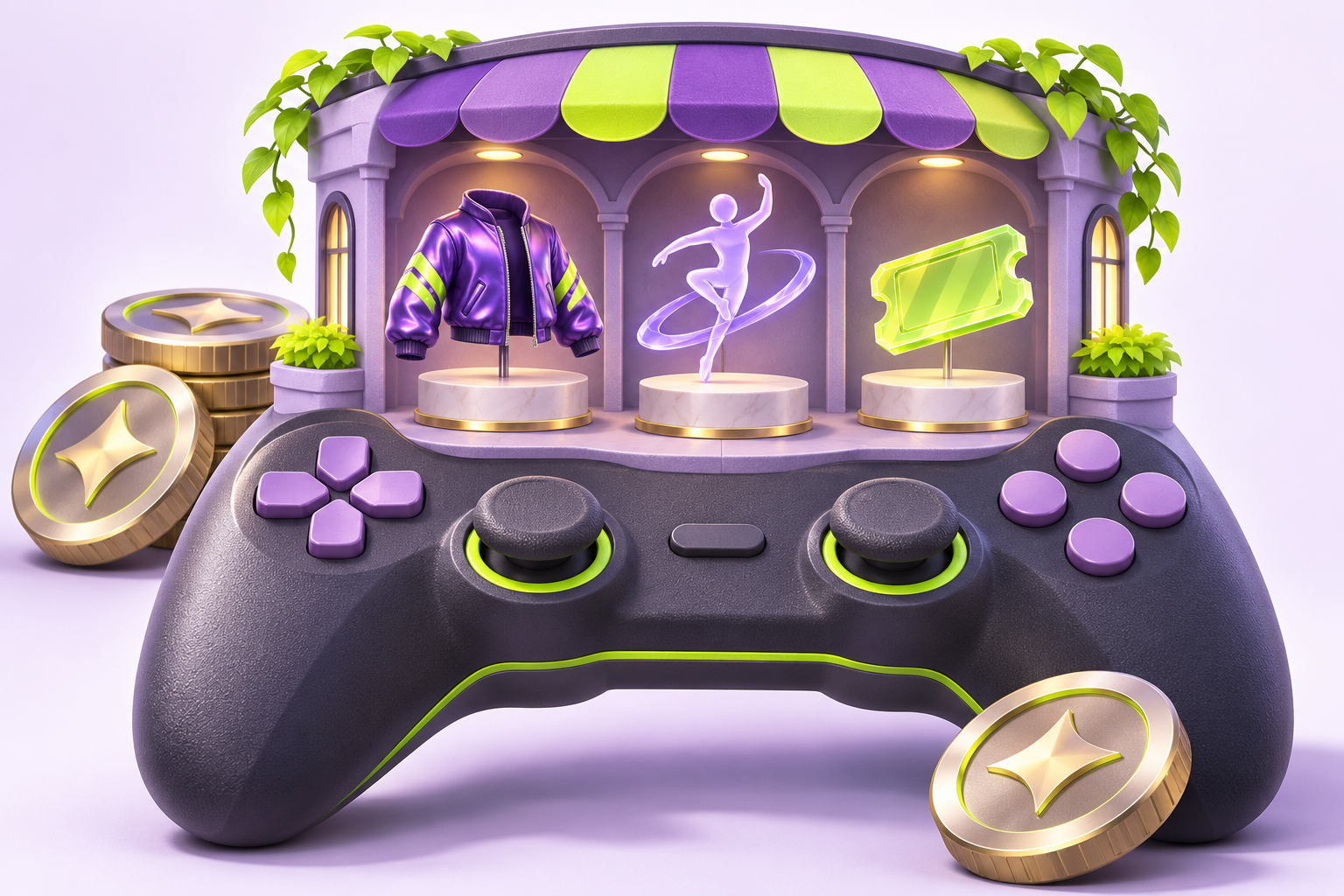
So what are you actually buying?
In Fortnite, for example, Epic sells V-Bucks and extras including outfits, emotes and passes. Epic says you can play Battle Royale without buying content. [1]
A cosmetic changes how something looks or sounds. Think a different outfit for your character. Whether that’s worth your money is your call. Enjoyment counts. So does knowing the price.
Other games can sell different things, including advantages during play. Always check what a purchase actually changes.
The coin maths is where it gets interesting.
Imagine a made-up game called Skybyte. It sells 500 coins for £5. The skin you want costs 750 coins.
At that rate, 750 coins are worth £7.50. But with an empty balance and packs of 500, you need to buy 1,000 coins for £10. After the purchase, 250 coins remain in the game.
The skin’s equivalent price and the amount you have to spend today are two different numbers. Both matter.
750 coins. Two price tags.
Our pretend shop sells 500 coins for £5.
Equivalent to £7.50
Equivalent to £2.50
Welcome to Skybyte.
Starting balance: 0 coins.
Every pack: 500 coins for £5.
You pay £10.00 to get an item worth £7.50 at this exchange rate. The remaining 250 coins stay in your game balance.
Invented game and prices. This is not a V-Bucks calculator. Real games have different bundles, prices and rules.
Your leftover coins have a job.
You’ve now got 250 coins sitting there. Another item costs 500. Buying one more pack suddenly feels like “using up” your balance.
Except you’d be spending another £5. Leftover coins are a reason to do the maths, not an instruction to buy more.
“Only 250 more coins” is still asking you to open your wallet.
That doesn’t mean every game shop is trying to trick you. Clear prices and optional extras can be a fair deal. The useful question is: can I easily see what I’m getting and what it costs?
And that countdown timer?
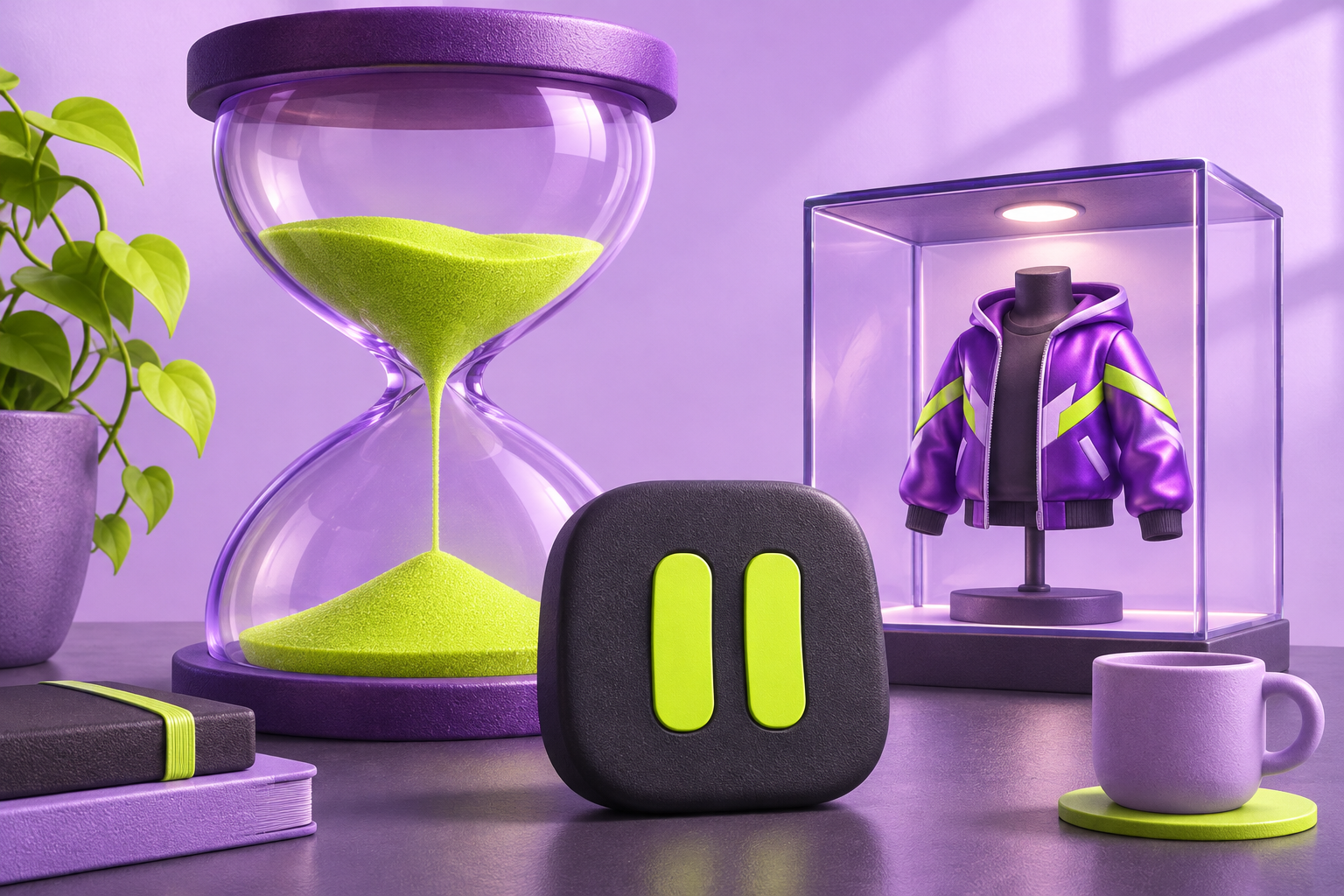
A real deadline tells you when an offer ends. A fake one pressures you with a deadline that isn’t real. The US Federal Trade Commission documents misleading countdown timers as one example of manipulative interface design. [2]
Even when a deadline is real, it tells you about the shop’s timetable. You still get to decide whether you want the thing.
YOUR MOVE
Before you buy, ask three things.
- How many pounds leave my account today?Include any coins you have to buy first.
- What exactly do I get?An outfit, an advantage, access—or a chance at something?
- Would I want this without the timer?Give the answer a moment.
If you still want it and it fits your budget, that’s a decision you understand. A sparkly hat can just be a sparkly hat.
The shop has a plan. Now you do too.
ONE LAST THING
750 coins. Packs of 500 for £5.
Empty balance. What do you pay?
Pick an answer. No leaderboard. No drama.
SHOW THE RECEIPTS
Check it for yourself.
- Epic Games: Fortnite FAQ
Supports the example of optional purchases and playing Battle Royale without buying content. See also Epic’s store purchase guide for item types.
- FTC: Bringing Dark Patterns to Light
September 2022 report, page 4, on misleading countdown timers and other deceptive design practices. This is general evidence, not an allegation about a particular game.
Sources checked 19 November 2026. Skybyte, its prices and all shop calculations are illustrative. This is an evergreen explainer. Source links open outside Sidequest. Report a correction.