Shopping rose in October. Spending rose faster.
New figures offer a useful lesson: pounds spent and the amount bought are different measures.
Sources checked 20 Nov 2026 · AI-assisted
Get this: Explain why spending more money does not automatically mean buying more stuff.
Two different measures
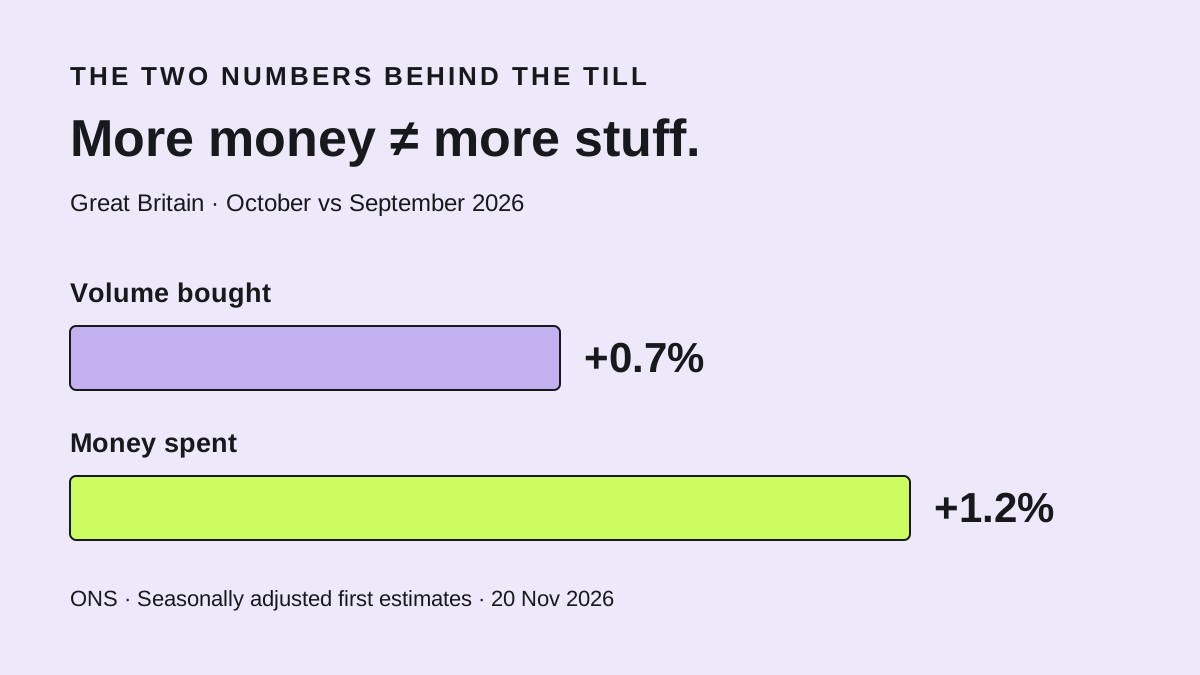
The volume of retail sales in Great Britain rose by an estimated 0.7% in October compared with September, the Office for National Statistics reported on 20 November. The amount spent rose by 1.2%.
Those figures measure different things. Spending counts pounds. Volume adjusts for price changes to estimate how much was bought. A bigger bill does not automatically mean a bigger bag.
Zoom out
The figures also adjust for regular seasonal patterns, helping make months more comparable. Over the three months to October, sales volumes were up 0.4% against the previous three months. ONS says monthly changes can be jumpy and should be read alongside longer measures.
These are first estimates and can be revised. The useful question when a sales headline appears: does it mean more money spent, or more stuff bought? The till can tell two stories.
MAKE IT MAKE SENSE
Two numbers. Two different questions.
The amount spent answers “how many pounds?” Sales volume asks “how much stuff?” Both can rise, but at different speeds. That is why the measure matters as much as the number. When a headline says shopping increased, look for what it counted and which periods it compared.
THINK IT THROUGH
A headline says people spent more in shops. What else would help you tell whether they bought more stuff?
Pick an answer in your head. Open it to see the reasoning.
Now put it in your own words.
How could spending rise without proving that people bought the same percentage more stuff? Explain the two measures in your own words.
Say it to yourself or talk it through with someone. If a bit feels fuzzy, go back to that paragraph.