Researchers reused cryptography-style maths to spot a pulsar in public NASA data. Smarter searching beat brute force.
Sources checked 20 Nov 2026 · AI-assisted · Revision 3
Get this: Explain how a new search method can change what researchers find in existing data.
What happened
NASA says researchers found a pulsar called PSR J1622−7204 in 15 years of public Fermi telescope data. It spins 261 times per second. The study appeared in Physical Review Letters on 19 November.
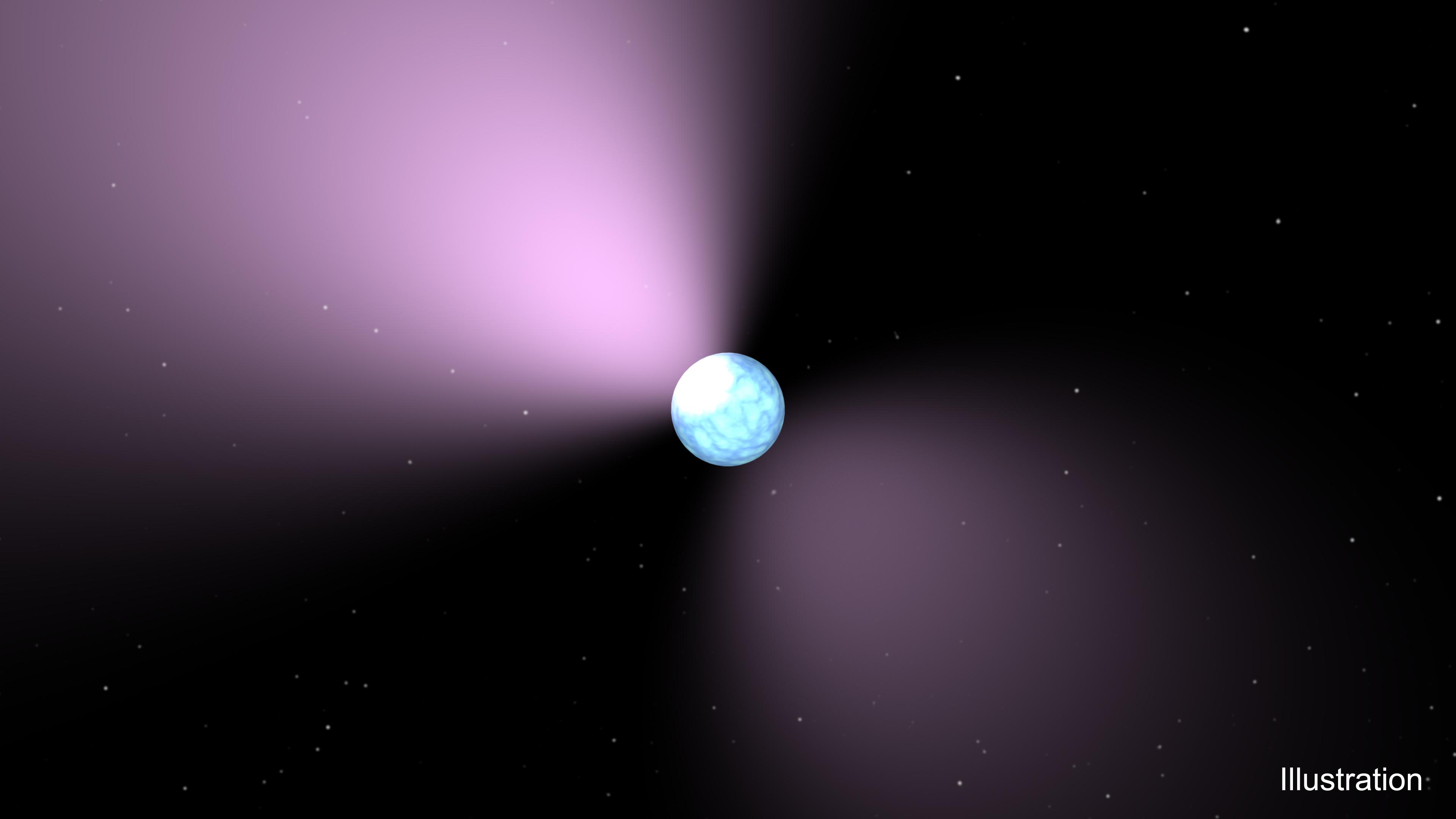
Artist’s illustration: a pulsar sweeps beams of radiation through space as it spins, like a lighthouse. This explains the idea; it is not a photo of the newly discovered pulsar. Illustration released 6 January 2017; reused in NASA’s 19 November 2026 report. NASA/JPL-Caltech. Published 6 Jan 2017. Source and credit
Why it matters
The new lattice-based search used about 10 hours of standard-processor time. NASA reports that an older method failed after roughly 600 processor-years. NASA describes the new approach as about a million times faster; the benchmark is dramatic, but the older search did not succeed.
The useful bit
The team adapted mathematical tools associated with cryptography instead of buying a bigger telescope. That is the real lesson: a better question can beat more brute force. Public scientific data also meant researchers could make a new discovery from observations already collected.
MAKE IT MAKE SENSE
The tool changed. The observations were already there.
A telescope collects observations. Researchers still need a way to find useful patterns in them. This team changed that search method and found something an earlier approach missed. The speed claim needs its caveat too: the older search failed, so the comparison is not between two successful searches.
THINK IT THROUGH
Which detail makes the dramatic speed comparison worth reading carefully?
Pick an answer in your head. Open it to see the reasoning.
AThe new search used about 10 hours of processor time.
Look at the difference.
That describes the new search’s computing work. The caveat is about the comparison: the older search did not find the pulsar, so these were not two successful searches.
That tells you how much observing history was available. It does not explain the speed comparison’s limit: the older search failed while the newer one succeeded.
That is the important caveat. The new method succeeded, while the older comparison failed; those are different outcomes as well as different amounts of computing work.